
Now that we have completed our foundation lessons in getting familiar with the tools, materials, and the letters of the Ruq’ah script alphabet, let’s recap what we have learnt.
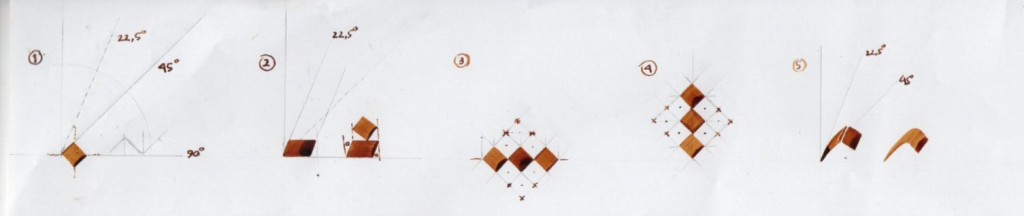
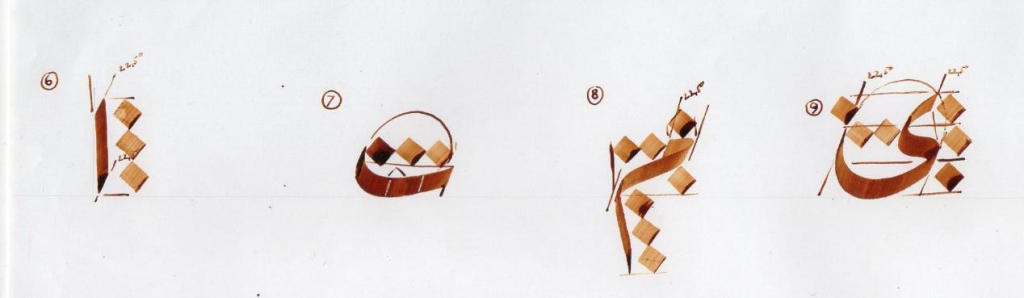
Explanation of letters Alif, Baa, Meem, and Yaa (ا, ب, م, ي)
Visit this link to view the explanation alif baa meem yaa video
How to prepare your Mashq for submission (for students who are continuing their studies in our online saturday morning class)
Mashq in Arabic calligraphy terminology refers to “practice” or your work that you prepare for your teacher to critique. An essential part of training in Islamic calligraphy as in the saying attributed to Sayyiduna Ali R.A,
“الخط مخفي في تعليم الأستاذ وقوامه في كثرة المشق ودوامه على دين الإسلام”
“Calligraphy/ writing is hidden in the teachings of the Ustadh and it’s strength lies in lots of practice / mashq, and it’s continuity is upon the Deen of Islam.”
Practice does not necessarily make perfect. Only mindful practice will produce results. This type of practice is also known as “deep practice” and means that you should analyse the master copy and compare it against your work. If you notice any part of a letter or stroke differs, then try to repeat it with more mindfulness.
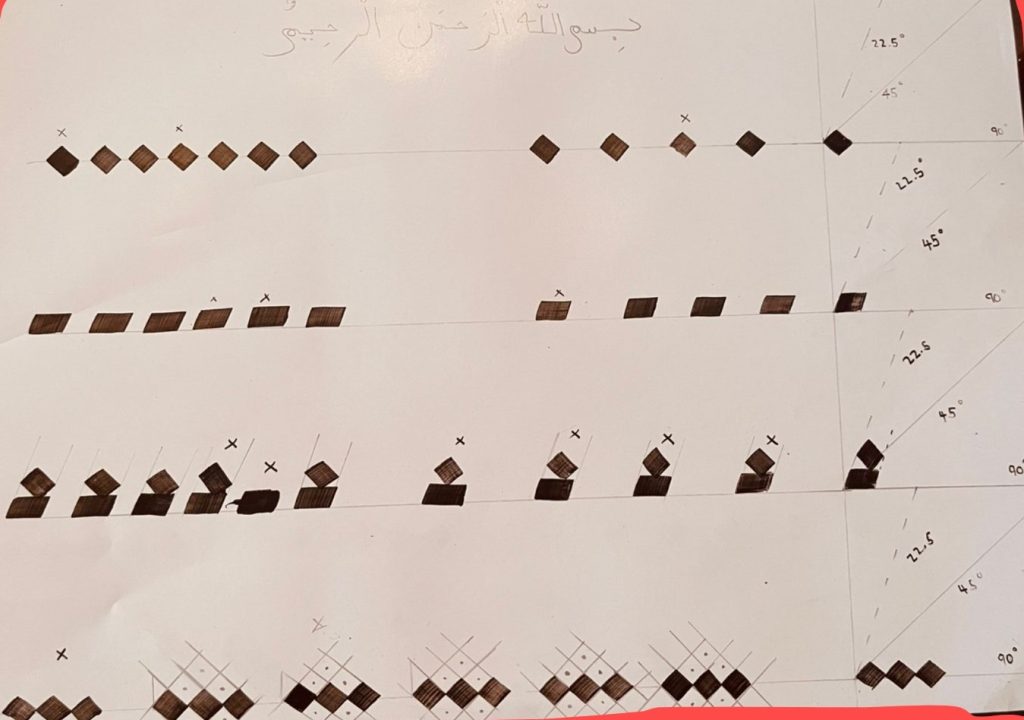
Neat layout using ruled lines
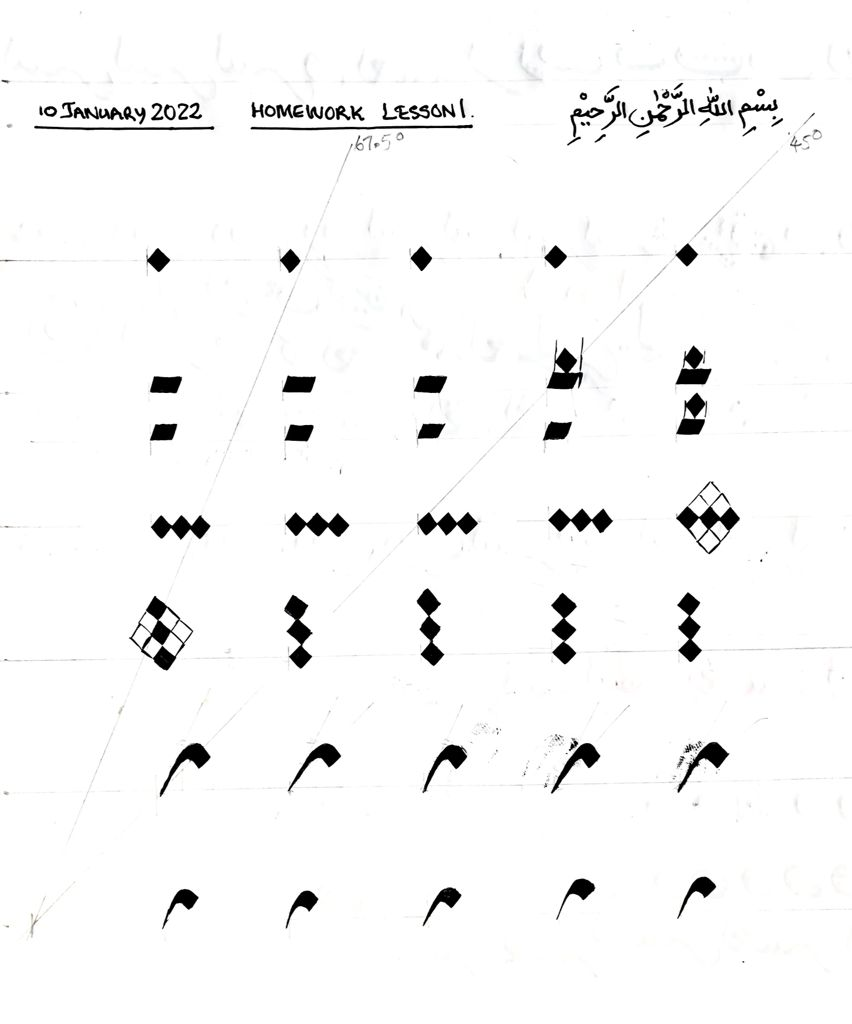
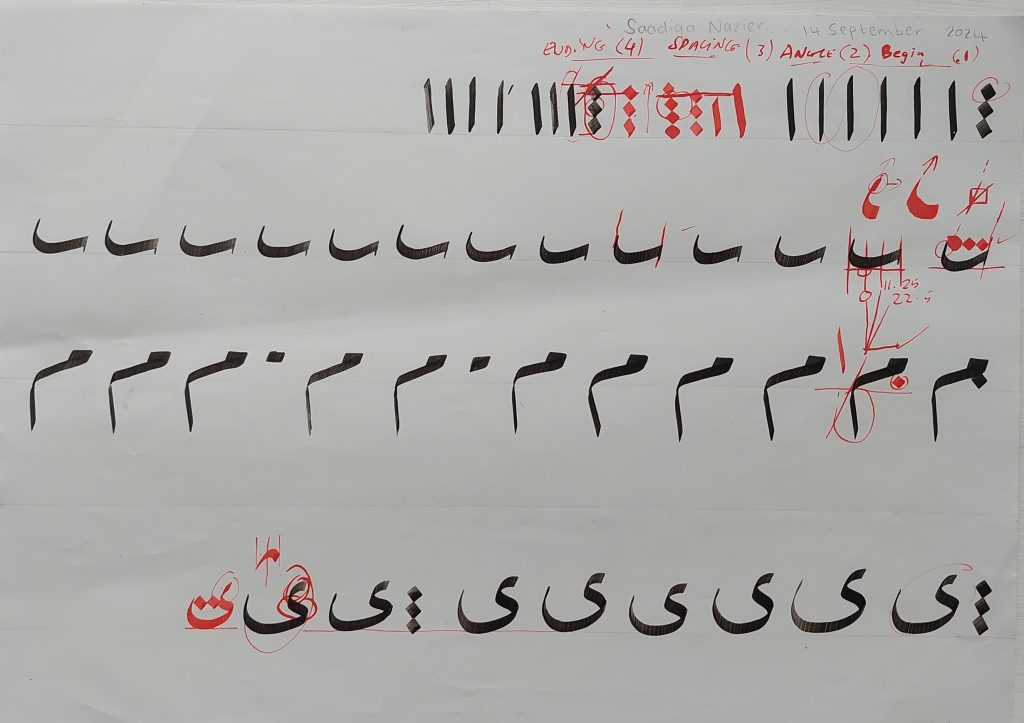
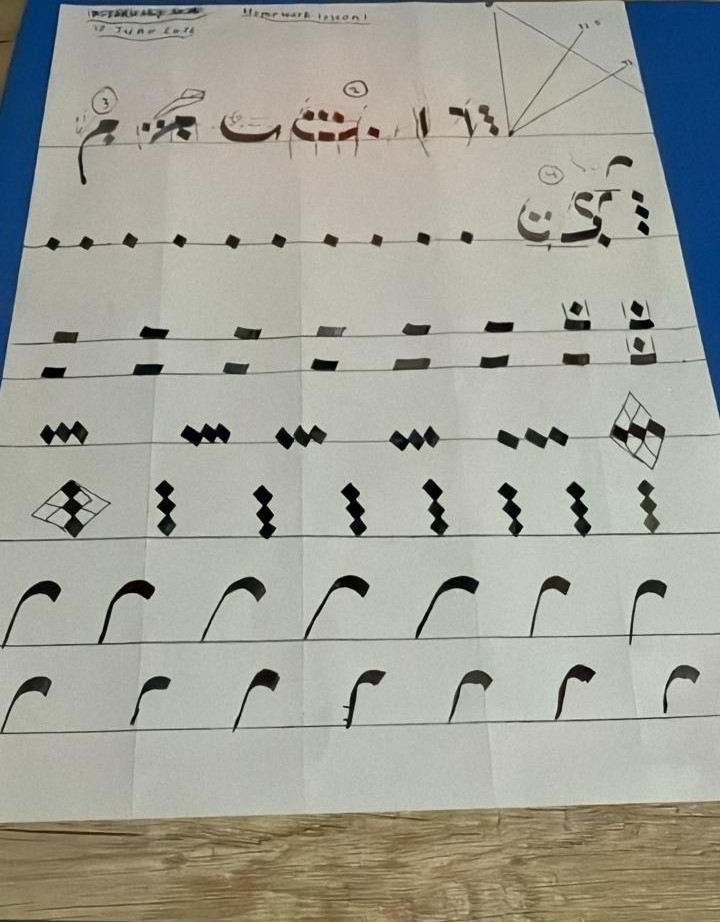
You can scan your work for online submission using a physical scanner, or a scanner app on your phone. Cam scanner is a common app used, but please do your research and find the best possible app for your phone.
Practice as much as you like, but it is recommended to set aside at least 20 – 30mins per day in order to improve and sharpen your skills. Once you have practiced enough and you feel that you have grasped the lesson, you should prepare your final copy which is the one which will be submitted for corrections / التصحيح .
Your final copy should only include 3-5 examples of each exercise or letter. See pictures above.
Happy practicing!